The Darkest Hour and Blood is Thicker Than Water
Stacey Holloway
On view in The Mack and Mary Gibson Gallery October 5--January 8
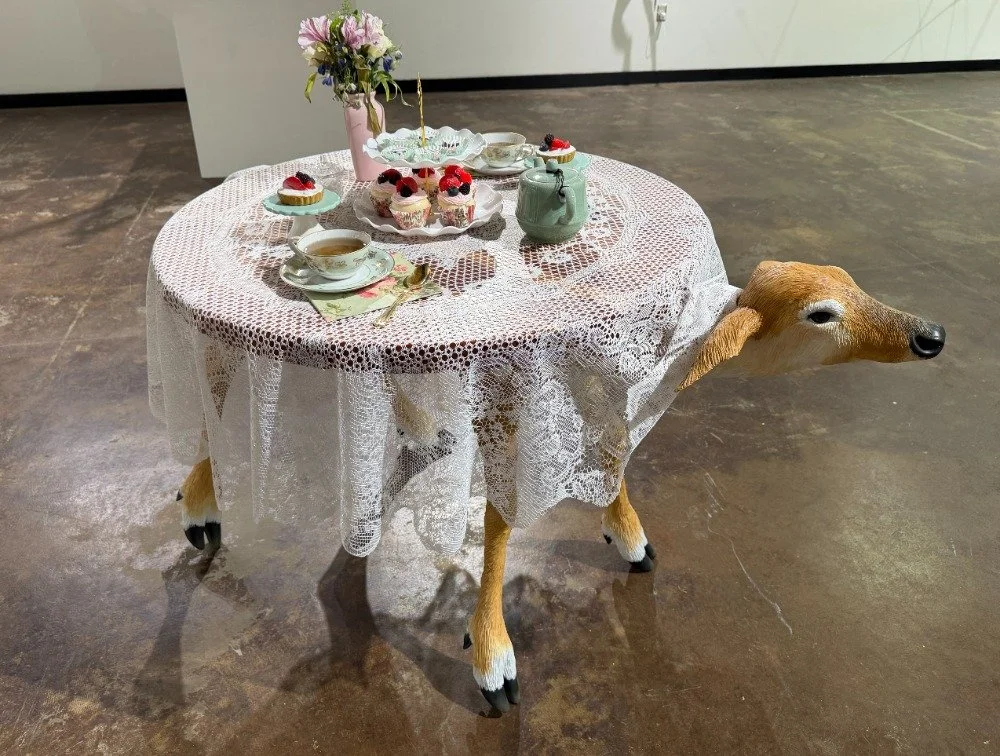
The Darkest Hour explores the complications that a community/family might experience while supporting and assisting those with severe mental health issues. As someone who has close family members with mental and social obstacles, I have witnessed, not only the struggle of those family members but also the toll that it takes on the rest of the family. The title, The Darkest Hour, refers to the saying “the darkest hour is always before dawn,” which means that the sky is at its blackest right before the sun rises or when times are at their worst, they tend to soon get better. This is a viewpoint that my family tries to take during some of our hardest times. Within this body of work, I use the symbolism of melanistic animals (having an abundance of melanin in the skin) and albino animals (having a lack of melanin in the skin) to represent the heartbreak, the isolation, the encouragement, the motivation, the knowledge and the physical/mental struggle that takes place within such a household.
The Blood is Thicker Than Water series explores the wide range of personalities, experiences, and identities that come together to form our families and communities. The title draws on the familiar phrase “blood is thicker than water,” referencing our collective efforts and shared responsibility for support and success in our communities. We sometimes have a natural tendency to measure ourselves against others within the commonwealth to understand, relate or find our place. However, each individual is shaped by a unique combination of background, culture, temperament and lived experience, making direct comparison not only difficult, but often misleading. What may look similar on the surface can be fundamentally different at its core. By highlighting these contrasts, this series challenges the assumption that sameness is the standard by which we should judge one another. Instead, the series invites viewers to recognize difference as something essential rather than divisive. It suggests that understanding does not come from forcing parallels where none exist, but from acknowledging and respecting the individuality of each person. In embracing what makes us “incomparable,” it celebrates the complexity that strengthens our relationships and enriches our shared communities.